Weingut Leitz is one of the defining Riesling estates of Germany’s Rheingau, based in the historic wine town of Rüdesheim am Rhein. Led by owner and winemaker Johannes Leitz, the estate has built an international reputation for expressive Rieslings that capture the dramatic vineyards overlooking the Rhine, from approachable everyday bottlings to remarkably mineral, age-worthy wines from some of Rüdesheim’s greatest steep-slope sites.
The Leitz family’s connection to winegrowing stretches back to 1744, but the modern estate owes much of its identity to Johannes. His grandfather, Josef Leitz, rebuilt the winery after it was destroyed during World War II. Johannes’ father subsequently took over but died when Johannes was only 14 months old. His mother kept the small family winery alive as a secondary business until Johannes was ready to continue it himself.
After completing his training as a master winemaker, Johannes took control of the estate in 1985 at just 21 years old. At the time, he was working with only 2.9 hectares of vines. His fascination with terroir became the driving force behind the winery's transformation. Rather than simply producing Riesling as a recognizable varietal style, Johannes became interested in showing how dramatically the grape could express differences in elevation, exposure, microclimate, and soil. Under his direction, Leitz grew from a tiny family property into one of the Rheingau’s internationally recognized estates.
Riesling is unquestionably the heart of Weingut Leitz. The estate is overwhelmingly planted to the variety, with a small amount of Spätburgunder, or Pinot Noir. Johannes describes his philosophy as a “hands-off” approach: move the wines as little as possible, protect them from unnecessary oxygen exposure, and allow them to develop their own character. Rather than imposing a predetermined style on every wine, the objective is to preserve the identity of the vineyard from which it came.
That philosophy becomes particularly compelling in the Rüdesheimer Berg, the spectacular wall of vineyards rising above the Rhine west of Rüdesheim. Here, Leitz works with celebrated sites including Berg Schlossberg, Berg Rottland, Berg Roseneck, and Berg Kaisersteinfels, along with the distinctive Rosengarten vineyard surrounding the historic Brömserburg castle in Rüdesheim. These vineyards reveal just how diverse Riesling can become within a remarkably small geographical area.
Berg Schlossberg is among the most dramatic. Vineyard rows rise above the bend of the Rhine on slopes reaching gradients of approximately 65 percent. Taunus quartzite and red slate dominate the soils, while intense sun exposure and the heat retained by the rocky ground create an extraordinary environment for Riesling. Berg Rottland, meanwhile, combines slate and quartzite with loess loam, producing wines noted for vibrant acidity, balance, and longevity.
Higher on the mountain, Berg Kaisersteinfels presents another personality entirely. Its historic terraces reach approximately 280 meters above sea level, with sparse, rocky quartzite and slate-influenced soils and a cooler microclimate. The difficult conditions help produce Rieslings characterized by striking vibrancy and minerality. Leitz has devoted considerable effort to restoring old terraced vineyards here, preserving both an important piece of Rheingau viticultural history and a landscape capable of producing some of the estate's most distinctive wines.
The work in these vineyards can be demanding. Leitz farms approximately 18 hectares of Rüdesheim's steep slopes, maintaining historic dry-stone walls and carefully tending parcels where conventional mechanization can be difficult. Across its broader vineyard holdings, the estate emphasizes soil fertility, biodiversity, erosion prevention, responsible water management, and reduced machinery use. Cover crops are used to protect and strengthen soils, while compost made from the winery's own grape pomace returns nutrients to the vineyards. The estate is certified through the FAIR'N GREEN sustainability program.
That restrained philosophy continues inside the winery. A modern facility constructed in 2012 combines precise contemporary equipment with traditional cellar practices. Stainless steel provides control and freshness, while wooden barrels are used for selected wines. In the estate's historic cellar, some wooden barrels are as much as 60 years old. Grapes may be pressed directly or receive skin contact depending on the vintage, and the juice is clarified naturally through sedimentation before fermentation. The goal throughout is gentle handling rather than unnecessary manipulation.
Leitz also demonstrates that serious German Riesling does not have to be intimidating. Eins Zwei Dry, the estate's dry Rheingau Riesling, has become its calling card, offering a bright and accessible introduction to Johannes Leitz's style. At the opposite end of the spectrum are the estate's VDP.GROSSE LAGE wines and Grosses Gewächs bottlings, which explore individual vineyard sites with far greater depth, structure, minerality, and aging potential.
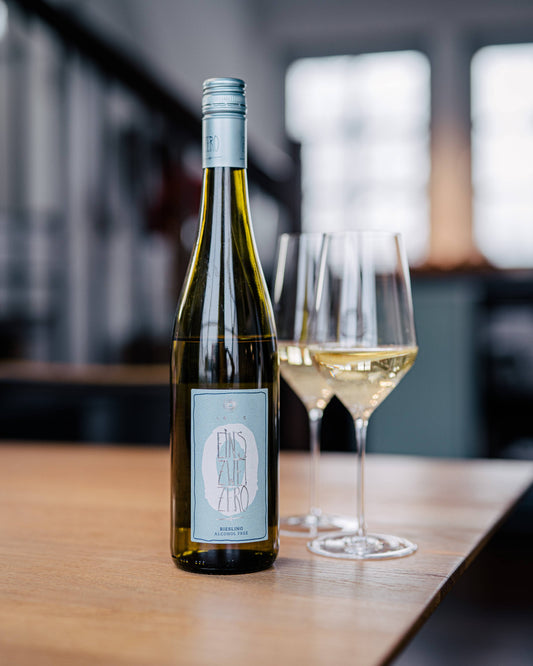
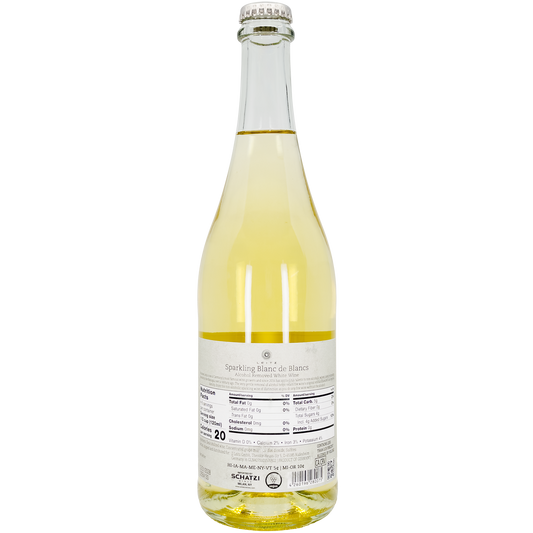
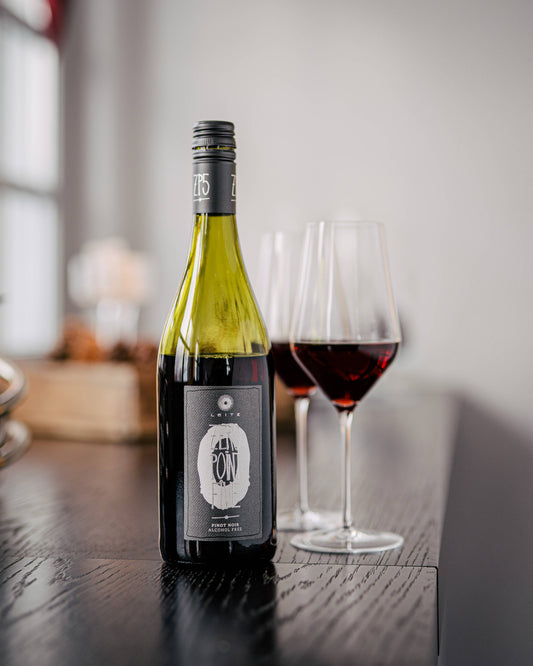
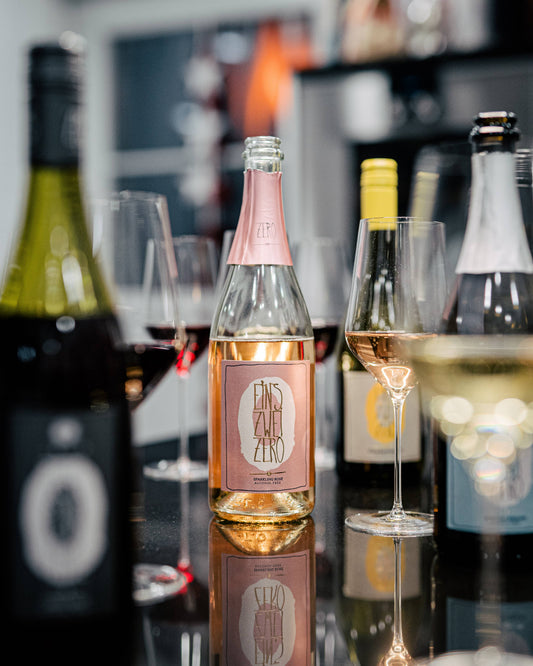
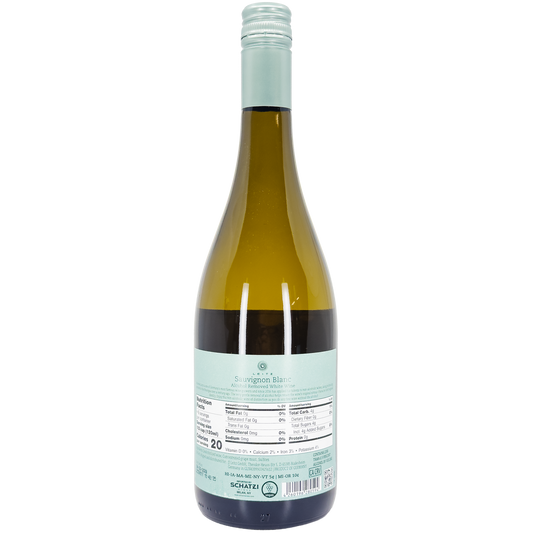
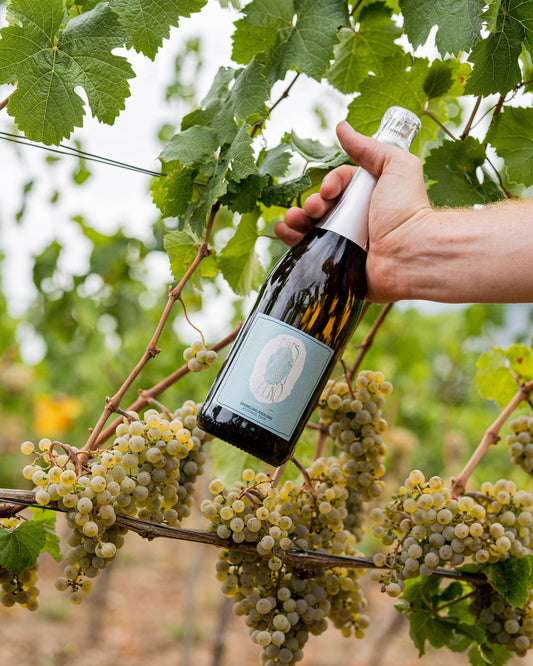
The winery has also become known internationally for EINS-ZWEI-ZERO, its collection of alcohol-free wines. The range uses gentle vacuum distillation to remove alcohol while attempting to preserve the freshness and natural aromas of the underlying wine, extending the Leitz philosophy into an increasingly important category beyond traditional wine.
Despite the estate's considerable growth and international following, Johannes Leitz continues to approach his work with a distinctly vineyard-first mentality. He has said that he does not particularly like the idea of “making” wine because it suggests forcing one's will upon it. He instead sees the winegrower as something closer to a mentor, supporting the wine as it develops rather than trying to manufacture its personality.
That idea captures Weingut Leitz particularly well. From the steep, sunlit terraces above the Rhine to the cellar below, the estate is built around allowing Riesling to communicate where it was grown. Whether through the fresh, immediately inviting character of Eins Zwei Dry or the profound mineral expression of a single-vineyard Rüdesheimer Berg Riesling, Johannes Leitz has helped demonstrate why the Rheingau remains one of the world's great places for this remarkable grape.